Restaurant Review Response Examples
You got a review that needs a response and you're not sure what to say. These are real-world restaurant review response examples you can copy, tweak, and post — covering the stuff restaurant owners actually deal with: wrong orders, long waits on a Friday night, a server who had a bad day, and the regulars who leave you five stars without being asked.
What Makes These Responses Work
We've looked at thousands of restaurant review responses. The good ones share a few things — and most of it comes down to not sounding like a corporate template:
- ✓Name what actually happened. 'Your salmon was overcooked' is specific. 'We're sorry for the inconvenience' could be about anything — a parking ticket, a delayed flight, a restaurant meal. Specificity shows you read the review.
- ✓Skip the backstory. Nobody on Google wants to hear about your staffing issues or your supplier switching vendors mid-week. Own the problem, move on.
- ✓Give them a reason to come back. An email address, a direct phone number, a free appetizer on the next visit. Vague promises don't cut it.
- ✓Match their energy. A 1-star rant about food poisoning needs a completely different tone than a 3-star 'it was fine, nothing special.' Read the room.
- ✓Keep it under 5 sentences. The longer your response, the more defensive it reads. Say what needs saying and stop.
- ✓Remember who's really reading. The reviewer might never come back. But the 50 people checking your reviews this week before picking a dinner spot? They're watching how you handle it.
The Reviews That Trip Restaurant Owners Up Most
Some reviews are easy to respond to. A glowing 5-star basically writes itself. A clearly unfair 1-star from someone who was never a customer — you can address that calmly and move on.
The hard ones are the 2- and 3-star reviews where the customer has a point. The food was fine but not worth the price. The service was slow on a Saturday night. The ambiance was nice but the portions were small. These are the reviews where you have to resist the urge to explain or justify, and instead just acknowledge it.
The worst response to a valid 3-star review is a paragraph explaining why things went wrong. The best response is two sentences that show you heard them, and one sentence giving them a reason to try again.
Restaurant Review Response Examples by Situation
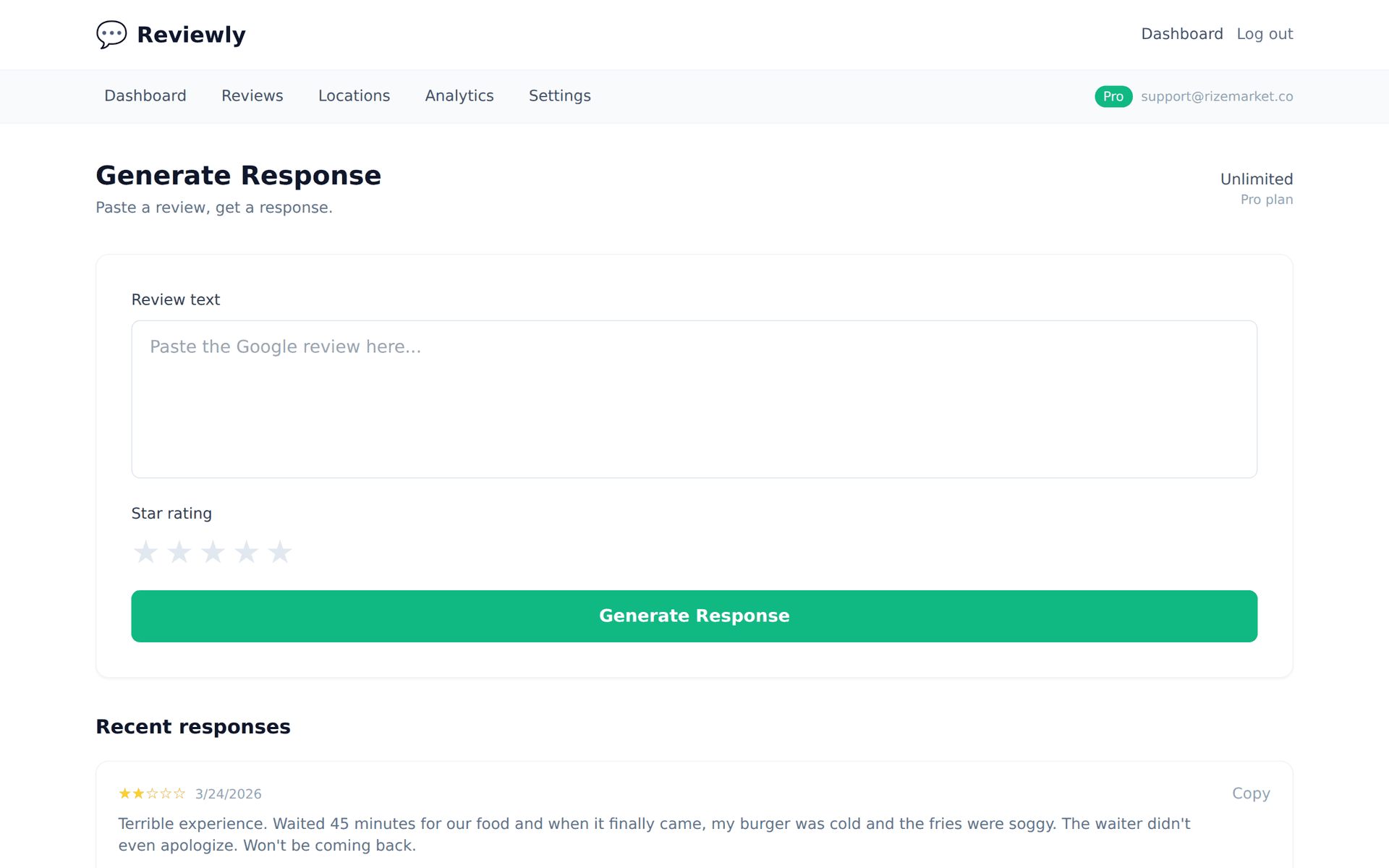
Copy any of these or paste your own review into Typani above — it'll write one matched to the specifics.
“Ordered the salmon and it was completely overcooked. Dry, flavorless, and for $34 I expected way better. The sides were cold too. Won't be back.”
“Thank you for the honest feedback. A $34 salmon should be perfect — dry and flavorless isn't acceptable. We've shared this directly with our kitchen team. If you're open to giving us another shot, please email us at [email] and your next meal is on us. We'd like to prove this isn't our standard.”
“Waited over an hour for a table even with a reservation. When we finally sat down the server seemed annoyed we were there. Food was decent but the whole experience felt rushed after the long wait. Probably won't return.”
“An hour past your reservation time is unacceptable, full stop. You made the effort to book ahead and we didn't hold up our end. We're looking into what happened with our seating that night — and your server's attitude isn't something we take lightly either. We'd genuinely like another chance. Reach out to [email] if you're willing.”
“Food was good, not great. The bruschetta appetizer was excellent but my chicken parmesan was pretty average. Service was friendly. Might try again but there are a lot of Italian places in the area to compete with.”
“Fair point — if the chicken parm didn't stand out, we need to make it stand out. Glad the bruschetta landed though, that's one our kitchen is proud of. If you do give us another visit, ask for the osso buco — it's the dish most people come back for. Thanks for the honest take.”
“Found a hair in my pasta. Told the server and she just said 'sorry' and offered to bring another plate. No manager came over, no discount, nothing. We paid full price and left. Disgusting.”
“That's a terrible experience and the way it was handled made it worse. A hair in your food should trigger an immediate manager visit, a remade dish, and your meal comped — not a shrug from the server. We've addressed this with our floor staff directly. Please contact us at [email] so we can refund your meal and discuss how to earn back your trust.”
“Best Italian food I've had outside of Italy. The handmade pasta was incredible, the wine pairings were spot-on, and our server Jake was knowledgeable without being pushy. Already booked our next visit.”
“Already booked — that's the best kind of compliment. Our pasta is made fresh every morning and we're glad it shows. Jake is going to be pumped when he sees this — he puts real thought into those pairings. See you next time.”
“We come here almost every week and it never disappoints. Only reason it's not 5 stars is the parking situation, which isn't really the restaurant's fault. The carbonara is the best in the city.”
“Every week! You're family at this point. We know the parking is rough — there's a municipal lot on 3rd Street that's free after 6pm if that helps at all. And we'll pass the carbonara compliment to our chef Marco, he'll appreciate it. See you next week.”
Why Restaurants Use Typani Instead of Templates
Here's the reality of running a restaurant: you're on the floor during service, dealing with suppliers in the morning, doing payroll on Sunday, and somewhere in between you're supposed to sit down and write thoughtful replies to 15 Google reviews? It doesn't happen. The reviews pile up, the unanswered ones make you look disengaged, and the ones you do answer at 11pm after a double shift sound tired because you are tired.
Templates seem like the fix until someone mentions their anniversary dinner, a specific dish, or their kid's birthday party. Suddenly your copy-paste response about 'valuing all feedback' looks tone-deaf next to a review about a ruined celebration. Typani reads what the customer actually wrote — the dish, the occasion, the complaint — and writes a response that addresses all of it. Takes about 5 seconds. You can edit it, or just copy and post.
The restaurants we see doing this well aren't writing perfect prose. They're just responding consistently, quickly, and specifically. That's what moves the needle on Google Maps rankings and that's what convinces someone scrolling through your reviews at 7pm to pick you over the place down the street.
Start Responding Free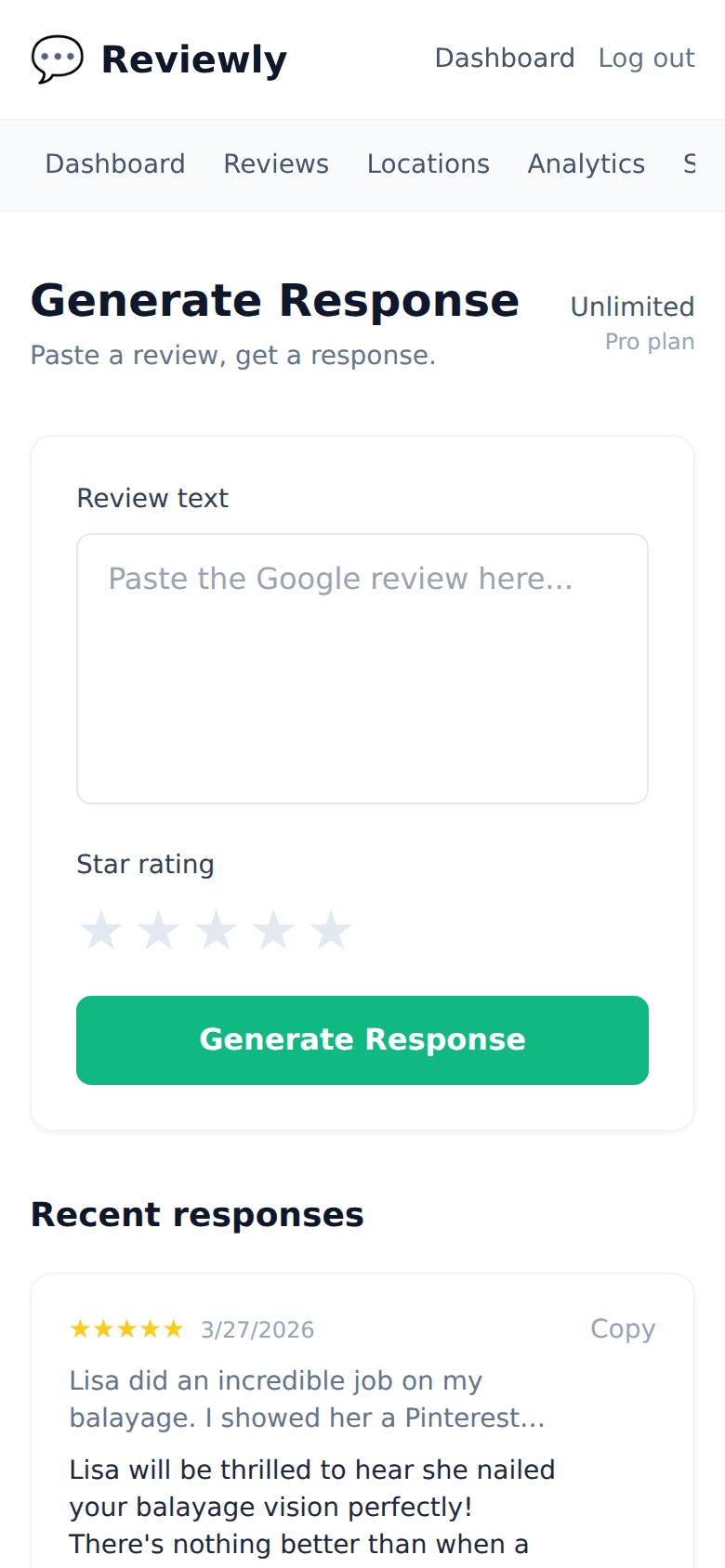
Frequently Asked Questions
Everything owners ask before they start using Typani.
Should restaurants respond to every single Google review?
+
Yes — but it doesn't need to be a novel every time. A genuine two-sentence thank-you on a 5-star is fine. The negative ones need more care, obviously. The point is consistency: when someone is deciding between you and the restaurant two blocks over, they notice which one has an owner who actually shows up in the reviews.
How fast should restaurants respond to negative reviews?
+
Same day if you can, 24 hours at the outside. A week-old unanswered complaint looks like you either didn't notice or didn't care. We get that Friday night service isn't the time to sit down and write responses — that's kind of the whole reason tools like Typani exist.
What if a review is clearly fake or from a competitor?
+
Respond anyway. Write something calm and professional: 'We appreciate feedback from all our guests — we don't have a record of this visit, but we'd love to look into it if you contact us directly.' Then flag it to Google separately. Future readers can't tell if a review is fake, but they can definitely tell when an owner gets defensive.
Should the owner respond or can a manager handle it?
+
Whoever can do it consistently. Seriously, that's the whole answer. An owner who responds to 3 reviews a month and a manager who responds to all of them — the manager wins every time. What kills you is the gaps, not who's filling them.
Does responding to reviews actually help with Google Maps rankings?
+
Google has said review engagement factors into local search rankings. But forget the algorithm for a second — when someone searches 'Italian restaurant near me' and clicks through to your profile, they're scrolling your reviews. An engaged owner who responds thoughtfully to complaints is going to win that click over a profile full of unanswered 1-stars.
What about reviews on Yelp or TripAdvisor — do those matter too?
+
For restaurants, Google reviews drive the most local traffic by far. Yelp still matters in some cities (San Francisco, New York). TripAdvisor is more relevant if you're in a tourist area. Respond everywhere you get reviews, but if you're only going to focus on one platform, it's Google.
Built for busy local business owners
Typani writes on-brand replies to every Google review in seconds, so you can answer them all without giving up your evening.
Generate your first response in seconds
Free to start. No credit card. Works on any Google review.
Try Typani FreeRelated
Explore Typani